

Optimizing Electricity Use for Business Profitability
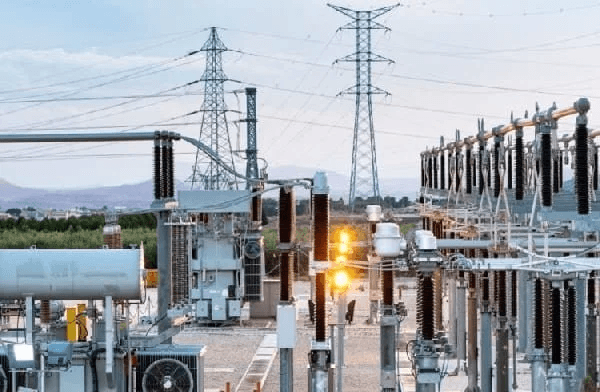
I have heard people talk about their businesses hitting the rocks year on year due to the high cost of operations. From high taxes to the high cost of utilities and the never-ending saga from regulators. If a business will survive in Ghana, the owners must take a keen interest in minimizing their operational costs as far as electricity is concerned.
As of the end of December 2021, the cost of electricity in Ghana was hovering around 0.369 cedis per kWh for households and 0.796 cedis per kWh for businesses. Without paying attention to these numbers, it is difficult to sustain a successful business. How can a business owner cut down on electricity costs without compromising output?
Understanding the energy sector
Before optimizing electricity, it helps to understand how the sector works in Ghana. The main sources of power are thermal and hydroelectricity, and the sector is regulated by government with some private participation. The Ministry of Energy formulates policy and monitors performance. It does not itself distribute power.
Key players
Power generation sits with the Volta River Authority and Bui Power Authority, alongside licensed independent power producers. Distribution is handled by the Electricity Company of Ghana in the south and NEDCo in the north. Tariffs are the concern of the Public Utilities Regulatory Commission, and equipment standards sit with the Energy Commission. When you hire an electrical vendor, that vendor should be licensed.
The way forward
Thermal and solar production are the practical path for businesses that need to keep operating when the grid is difficult. Solar still needs batteries, charge controllers, panels, and an inverter, plus quarterly maintenance. It is not a set-and-forget saving.
Get the best out of electricity
These three practices have been used across banking, telecommunications, and retail, and they are how a business can cut electricity costs by a minimum of 25% in the first year.
1. Audit your power system
Most businesses run machines until they break. Faulty equipment leaks power. A certified provider should audit the system on a schedule, not only after a failure.
2. Monitor what you are paying for
Many bills are marked Estimated rather than Actual. If estimated bills run for more than two months, correct that with the distributor. You should know what was supplied.
3. Use what is needed, not what is supplied
A 14 sqm office for two people does not need an air conditioner driven down to 16 degrees. Excess cooling spends the bill and wears the unit. Use the capacity the room actually needs.
There is more that can be done to reach larger savings over three years, whether or not tariffs rise. Optimizing electricity is every director and manager's responsibility, not only the technical assistant. The success of the business depends on all.